5 Things to Know About Junkanoo in The Bahamas
Every Boxing Day and New Year’s Day, Junkanoo groups bring months of work onto the streets of Nassau. Costumes built piece by piece, music you can hear before the parade reaches you, and a serious competition all come together on Bay Street.
If you’re planning to see Junkanoo for yourself, it helps to know what goes into the celebration—and why it means so much to The Bahamas.
What You'll Find in This Guide
- What we know about Junkanoo’s origins
- How Bahamian groups prepare their costumes and performances
- The instruments that give Junkanoo its sound
- Why the parade is also a competition
- Where to learn about Junkanoo beyond the main parade dates
1. Junkanoo’s Origins Are Still Debated
Junkanoo has deep roots in Bahamian history, but there isn’t one agreed-upon account of how it began. The most widely shared explanation traces the tradition to Christmas celebrations held by enslaved Africans in The Bahamas during the 18th century. Given time away from work, they gathered to sing, dance, wear disguises, and celebrate together.
Even the name has more than one proposed origin. One theory connects it to John Canoe, a figure in West African folklore. Another links it to the French phrase gens inconnus, meaning “unknown people,” and to the disguises worn by early revellers. Neither explanation is settled history.
What is clear is that Bahamians have carried the celebration forward and made it their own. Today’s Junkanoo is a living tradition shaped by the people who make its music, build its costumes, and take part year after year.
2. The Costumes Take Months to Make
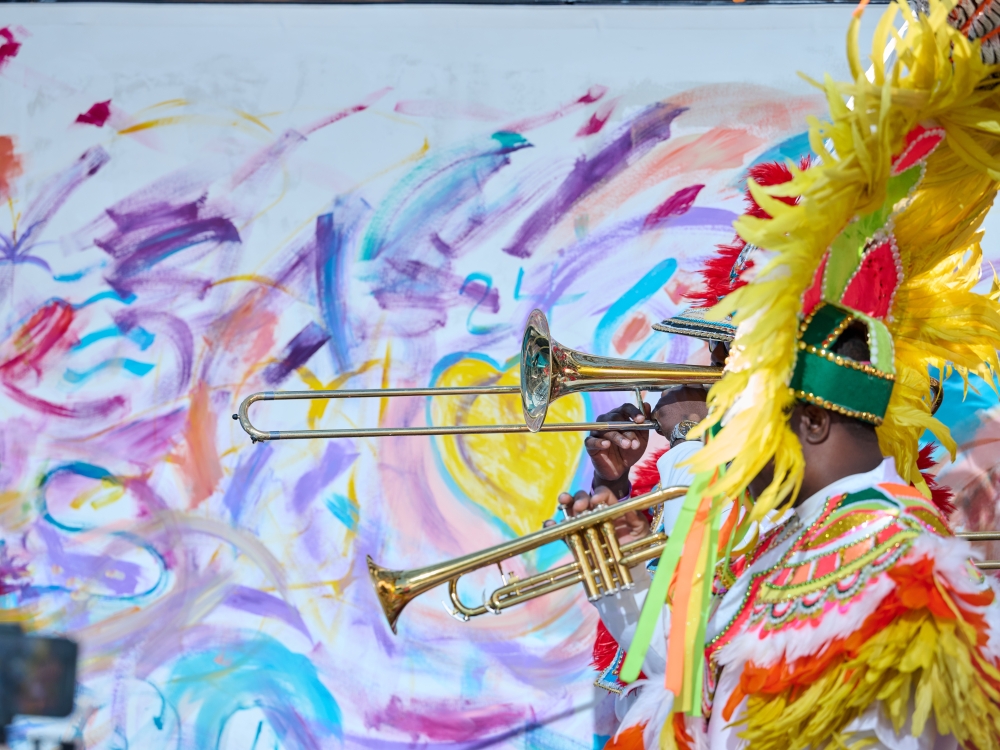
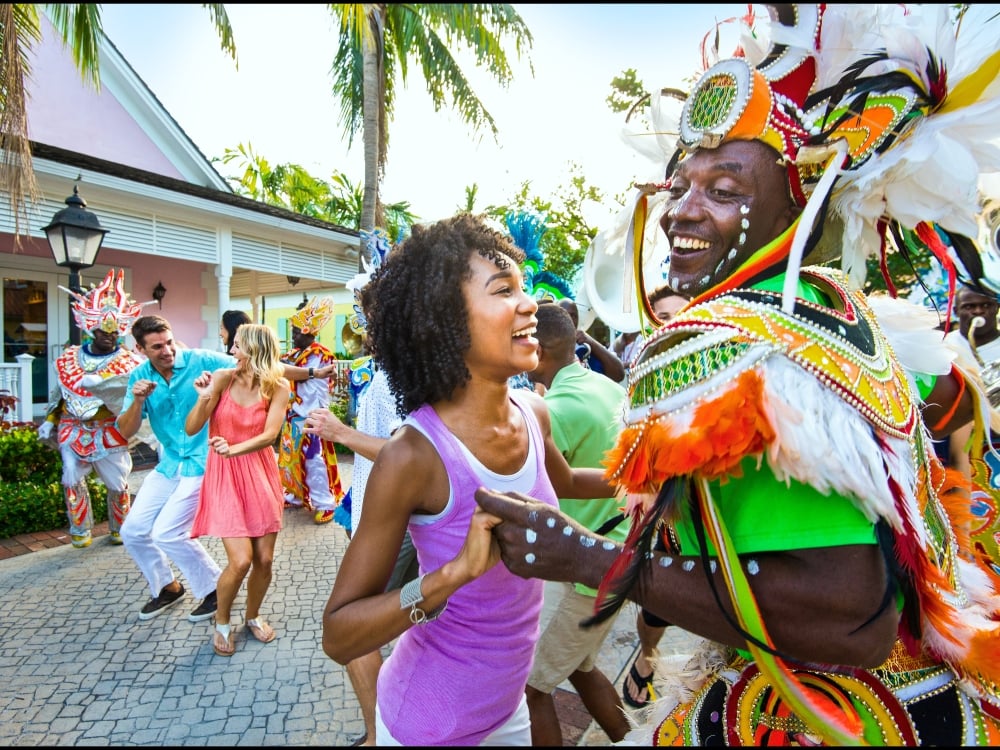
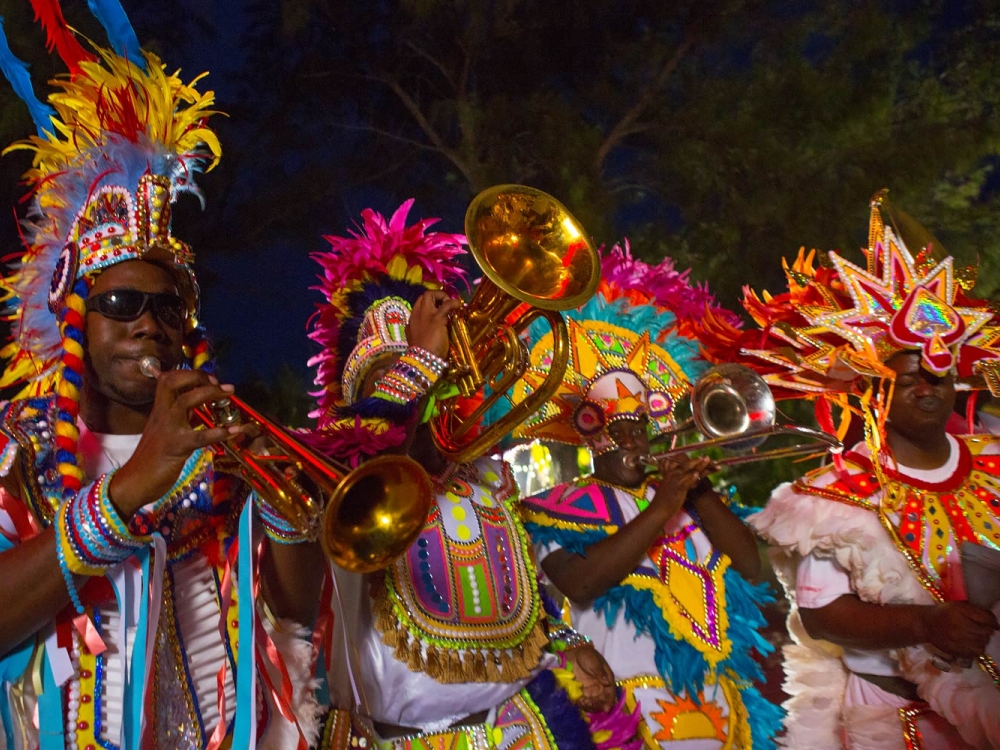
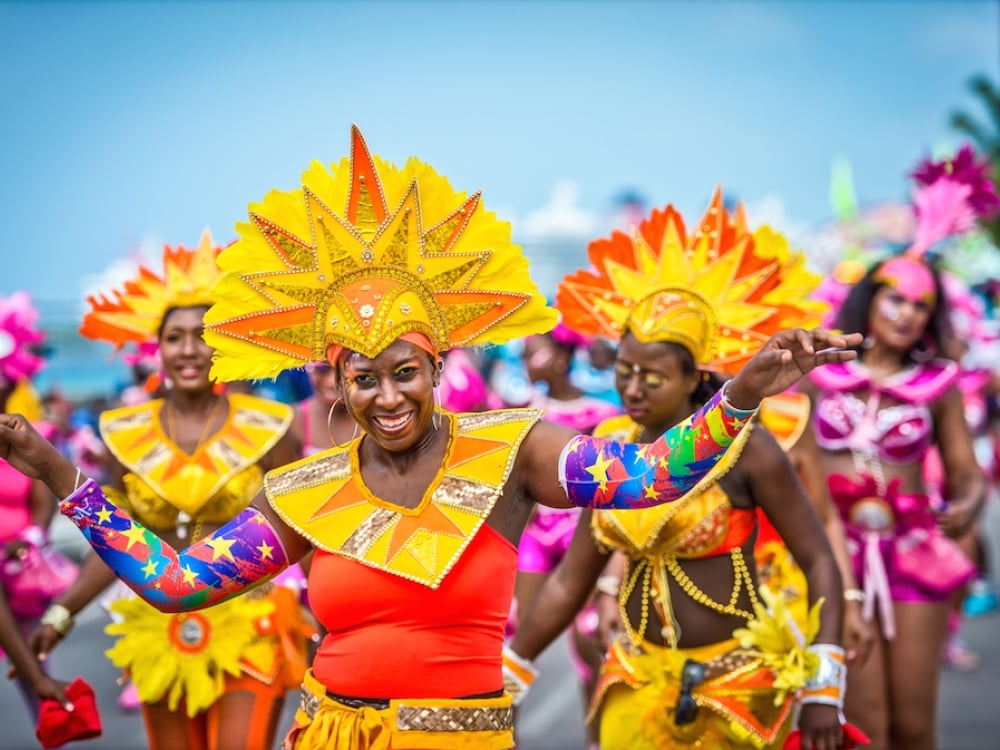
A Junkanoo costume can begin with something as ordinary as cardboard. Groups spend months turning it into a work of art with crepe paper, feathers, fabric, and rhinestones. The finished pieces are meticulously designed and crafted by hand, and they’re made to be seen in motion alongside the parade's dancing and music.
Each group chooses a theme—from Bahamian folklore to world history or current events—and interprets it through its costumes. Some of the largest costumes can take dozens of people to carry and feature moving parts, lights, and stunning 3D elements. The sheer craftsmanship behind these costumes is an art form in itself.
3. The Music Has a Sound of Its Own
You may hear Junkanoo before you see the first costume. Goatskin drums, cowbells, horns, and whistles give the parade its unmistakable sound, with musicians and dancers moving together through the streets.
Every instrument has a place and a story to tell. Take the cowbell and scrapers, for instance. These instruments trace their origins back to the tools enslaved people once used on plantations, later transformed into instruments of joy and resilience. Together, these musical instruments create a sound so lively and unmistakable that it’s said to have the “ability to wake up the dead, restore hearing to the deaf, and make your heart and spirit dance in unison.”
4. The Parade Is a Competition
While it may look like just one big celebration, Junkanoo is also a highly competitive event. Junior and Senior Junkanoo competitions are held, and bands or teams battle it out for titles in categories such as choreography, best music, best dance, and best portrayal of theme.
The groups have spent months preparing for this moment, and the crowds know it. Spectators get swept up in the excitement, cheering for their favourite groups as they march past in a parade of colour and dance.

5. You Can Learn About Junkanoo Outside the Main Parades
The Boxing Day and New Year’s Day parades are the best-known occasions to see Junkanoo in Nassau. If you’re travelling at another time of year, start at the Educulture Junkanoo Museum in downtown Nassau. Its exhibits explore Junkanoo’s history, music, and costumes, and visitors can take part in activities such as mask-making.
To get a small taste of Junkanoo, head over to Atlantis Paradise Island for Junkanoo Rushout. It’s a mini parade and street fair, celebrated on select Friday evenings throughout the year in the resort’s Marina Village, beginning at 9 pm.
Come See What All That Work Was For
For months, Junkanoo groups build costumes, practise music, and get ready to face the competition. Then Bay Street fills with people, the drums start up, and the work becomes a celebration everyone can share. If you can be in Nassau for Boxing Day or New Year’s Day, come see it for yourself.
Start planning your Nassau & Paradise Island vacation today.

Frequently Asked Questions About Junkanoo
The two major holiday parades take place in the early hours of Boxing Day, December 26, and New Year’s Day, January 1.
Bay Street in downtown Nassau hosts The Bahamas’ largest Junkanoo celebration. Junkanoo is also celebrated elsewhere in the country.
No. Boxing Day and New Year’s Day are the principal parade dates, but smaller celebrations and Junkanoo performances can also happen at other times of year.
Visitors can watch the parades, and participation may be possible through arrangements with a group or hotel, subject to parade rules. If you’d like to join rather than just watch, ask well in advance of your trip. Don’t assume you can step into the procession on the night.
Stories from the Island

Authentic Bahamian Food: Must-Try Dishes in Nassau & Paradise Island