Nassau's Pirate Republic: Blackbeard, Benjamin Hornigold, and the Golden Age of Piracy
There's a reason Nassau appears again and again in the history of Caribbean piracy. For a brief, unruly stretch of the early 18th century, some of the Atlantic's most notorious pirates weren't simply passing through. They were living here.
Benjamin Hornigold, Charles Vane, Calico Jack Rackham, and Edward Teach, better known as Blackbeard, all became part of Nassau's pirate story. What drew them was more practical than romantic. New Providence offered a useful harbour, nearby shipping routes, islands and channels to disappear among, and, crucially, very little effective government standing in their way.
The result became known as the Republic of Pirates. The name makes it sound more organised than it really was, but there's no question Nassau became one of the great pirate strongholds of the era. How that happened, who took advantage of it, and how Britain finally brought it to an end is one of the more extraordinary chapters in Bahamian history.
What You'll Find in This Guide
- How Nassau became a headquarters for Golden Age pirates
- The connection between Henry Every, Benjamin Hornigold, and Blackbeard
- What historians mean by Nassau's Republic of Pirates
- How Woodes Rogers brought the pirate era to an end
- Where you can explore Nassau's pirate history today
- Quick answers to common questions about Blackbeard and piracy in The Bahamas
Before Blackbeard, There Was Henry Every
Blackbeard gets the better nickname and considerably more screen time these days, but Nassau's pirate story starts earlier.
Henry Every, also spelt Avery, pulled off one of the most lucrative pirate raids of the 17th century when his crew captured the Mughal treasure ship Ganj-i-Sawai in 1695. The robbery made him the subject of an international manhunt. He eventually reached The Bahamas, where he bribed the governor and disappeared from the historical record soon afterward.
And when a pirate disappears with a fortune, it's easy to let your imagination start to wander.
Stories claimed Every had retired with his riches, returned to Britain, died penniless, or established a pirate kingdom in Madagascar. None has been proved conclusively. His vanishing act became part of his reputation, though, and helped establish the idea of the pirate captain who could seize a fortune and somehow escape the consequences.
Why Nassau Became Pirate Country
In the early 1700s, Nassau was a much different place than it is today.
War and repeated attacks had weakened the settlement. For pirates, that instability created an opening. Nassau sat close to heavily travelled Atlantic and Caribbean shipping routes, but the harbour itself also worked in the pirates' favour. Paradise Island, then known as Hog Island, helped shelter Nassau Harbour from the open ocean, while Potter's Cay at the eastern end made access difficult for larger naval vessels. Smaller boats could still move through the shallower water, giving pirates a valuable escape route if trouble arrived.
British authority on New Providence was also weak, with little local law enforcement capable of stopping them.
Former privateers were suddenly looking for work, too. During wartime, governments had authorised private ships to attack enemy vessels. When Queen Anne's War ended in 1713, those commissions dried up. Some men who had spent years raiding ships with official permission simply carried on without it.
Benjamin Hornigold was one of the most important figures to make that transition. Henry Jennings became another. Though rivals, the two emerged as leading figures among the pirates operating from Nassau. Their circle became known as the Flying Gang and eventually included names that now read like a who's who of the world's most notorious pirates. Charles Vane, Calico Jack Rackham, Anne Bonny, and Mary Read were all connected to Nassau's pirate world.
Blackbeard Comes to Nassau
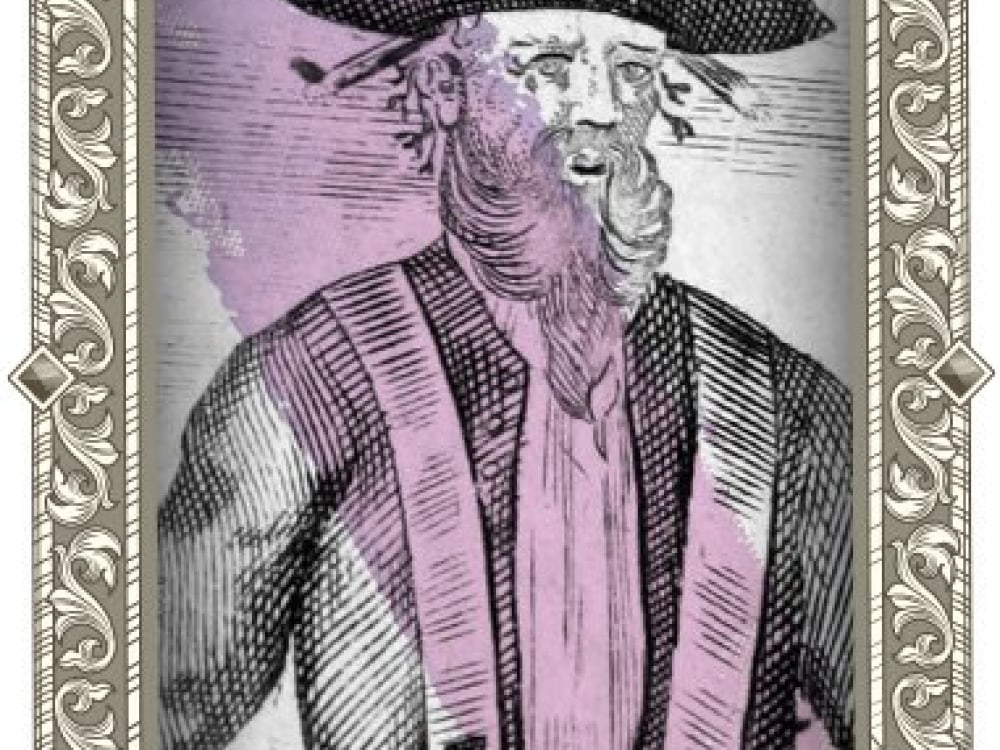
Edward Teach, whose surname also appears in historical records as Thatch, remains frustratingly mysterious before he became Blackbeard. Even his birth date isn't certain.
What we do know is that around 1716, he became associated with Benjamin Hornigold and the pirate community operating around New Providence. Hornigold eventually placed Teach in command of a captured vessel, helping launch the independent pirate career that would make him notorious throughout the Atlantic.
Teach was a ruthless pirate, but he was also a natural showman. He understood that a frightening reputation could sometimes do the work before a fight even began.
He grew out his large, imposing beard and dangled lit fuses down his face so smoke would rise past his wide, piercing eyes. The six pistols he hung across his chest like a bandolier were almost superfluous in such a foreboding spectacle. The result was deliberately terrifying. Merchant crews were known to surrender at the sight of him, often saving Blackbeard the trouble and danger of a prolonged fight.
His greatest prize was a captured French vessel that he renamed Queen Anne's Revenge. The ship carried approximately 40 cannons and a crew of around 300 men, giving Blackbeard firepower few merchant captains would have been interested in testing.
For a pirate whose entire career as Blackbeard lasted only a short time, he was very good at making himself impossible to forget.
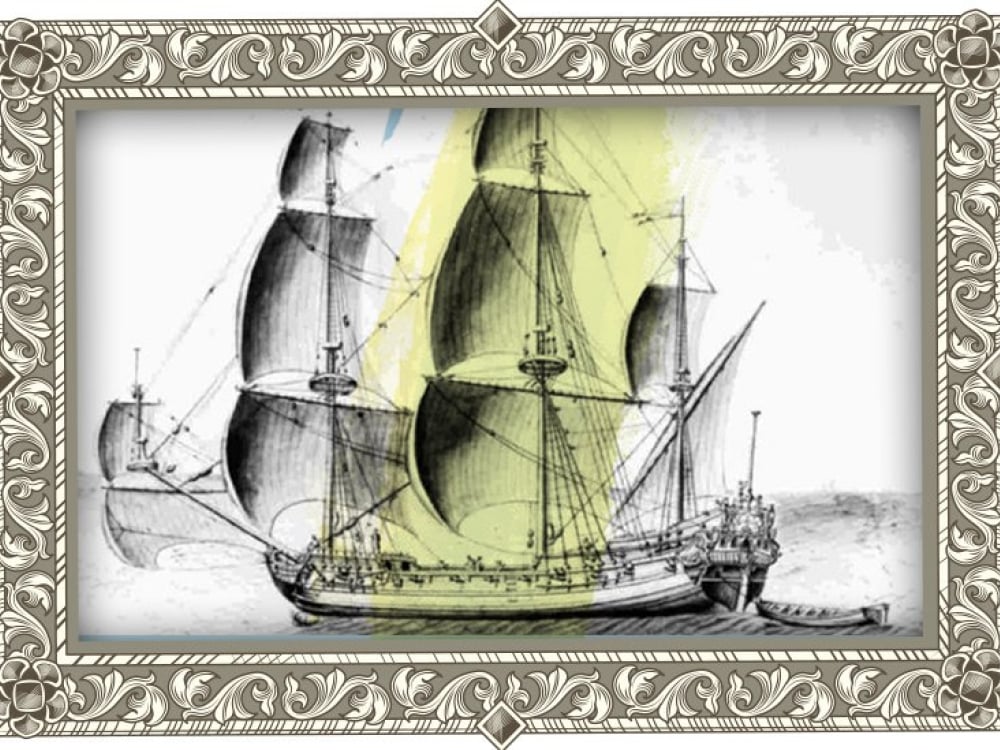
What Was the Republic of Pirates in Nassau?
The term "Republic of Pirates" is a little misleading.
This wasn't a republic in the modern sense, complete with elections, ministries, and government offices. Nassau had effectively slipped beyond firm colonial control, and pirate captains and their crews became the dominant power around the settlement.
Hornigold and Jennings were among the leading figures. Around them grew a community of crews who used Nassau as a base for raids throughout the Caribbean and Atlantic.
Life aboard their ships could also differ sharply from life in the Royal Navy or merchant service. Pirate crews could divide captured wealth among themselves, and sailors from a wide range of backgrounds joined their ranks. Blackbeard's men included former privateers, captured sailors, and Black and white crew members from different levels of society. That doesn't turn piracy into a progressive social experiment. These were armed men taking ships and property by force. But pirate crews could offer sailors money and autonomy they had little chance of finding elsewhere.
That contradiction is part of what makes Nassau's pirate period so interesting. The reality is messier than either the peg-legged cartoon villain or the freedom-loving rogue.
Nassau's Pirate Era Comes to an End
Eventually, the British decided that pirates were bad for imperial business, and by 1718, they were ready to reclaim Nassau. Woodes Rogers arrived that year as the first Royal Governor of The Bahamas with a clear assignment. Restore British authority and get the pirates out.
His most powerful tool was the King's Pardon, which offered clemency to pirates willing to surrender. Hundreds accepted. Others left Nassau or continued pirating and were pursued. Benjamin Hornigold took the pardon and eventually helped hunt former pirates. Charles Vane rejected British authority and escaped. Blackbeard also left Nassau.
The pirate stronghold that had flourished through the previous years was effectively finished.
Blackbeard's Final Battle
While Blackbeard may have left Nassau, he didn't leave the profession. By November 1718, he was operating along the North American coast. Virginia Lieutenant Governor Alexander Spotswood arranged an expedition against him, and Royal Navy Lieutenant Robert Maynard confronted Blackbeard near Ocracoke Island in North Carolina that November.
Maynard used deception. With many of his men hidden below deck, he made his vessel appear more vulnerable than it was. Blackbeard boarded and suddenly found himself facing men who had been waiting for him.
The fighting was brutal. Blackbeard found himself locked in one-on-one combat with Maynard. Blackbeard managed to break Maynard's sword before being attacked by Maynard's men, who had surrounded the two captains as they fought.
Blackbeard died after being struck by at least five gunshots and stabbed at least 20 times. Maynard returned to shore with proof of Blackbeard's death gruesomely displayed aboard his vessel.
After Blackbeard, Nassau's other famous pirates weren't far behind.
Calico Jack Rackham was captured and hanged in 1720. Charles Vane was captured and executed in Jamaica in 1721. The concentrated burst of piracy that made Nassau infamous was over almost as quickly as it had begun.
Where to Explore Pirate History in Nassau Today
Three centuries later, the legend of piracy in The Bahamas has proved much harder to kill. There are plenty of opportunities to learn about the buccaneers who sailed these waters when you visit Nassau and Paradise Island.
Pirates of Nassau
There's no better place to start learning about the pirates of Nassau than at the Pirates of Nassau museum on King and George Streets in downtown. The museum recreates Nassau during the Golden Age of Piracy, with exhibits on Blackbeard, Woodes Rogers, shipboard life, weapons, punishment, and the return of British rule.
Walk Downtown Nassau
Pirate history makes more sense when you see the harbour and downtown together.
Walk towards the waterfront and Woodes Rogers Walk, named for the governor who ended the Pirate Republic. From here, the importance of Nassau Harbour becomes obvious. Ships still dominate the view, although today's visitors arriving at Prince George Wharf should be more fearful of forgetting to reapply sunscreen than an encounter with Blackbeard.
Add the Bahamas Historical Society Museum
Pirates get the headlines, but they represent a remarkably short chapter in a much bigger Bahamian story.
The Bahamas Historical Society Museum on Shirley Street is the place to go for more context on the country's history. Its collections broaden the picture beyond the Golden Age, framing the pirate years as one fascinating piece of a much longer story.
Meet the Pirates Who Put Nassau on the Map
Nassau has lived many lives since Blackbeard sailed the waters here, and we wouldn't trade the city we know today for the pirate version. But this short, chaotic chapter in our capital's history continues to fascinated locals and vistors alike to this day.
Ready to experience Nassau for yourself? Start planning your trip to Nassau & Paradise Island and discover the history, culture, food, beaches, and people that give these islands their character today.
Frequently Asked Questions About Pirates in Nassau
Yes, although "republic" shouldn't be understood as a formal modern government. During the 1710s, weak British authority allowed pirates to dominate Nassau and use New Providence as a base. Benjamin Hornigold and Henry Jennings became two of its most influential figures, and their associates included some of the best-known pirates of the period.
Blackbeard was closely connected to the pirate community based in Nassau and began his pirate career alongside Benjamin Hornigold, one of the leading captains operating from New Providence. Nassau was an important base during his rise to notoriety.
Nassau combined a useful position near busy shipping routes with weakened colonial government and Bahamian waters that experienced sailors knew how to navigate. The end of Queen Anne's War also left former privateers looking for other ways to make money at sea.
Benjamin Hornigold, Blackbeard, Charles Vane, Calico Jack Rackham, Anne Bonny, and Mary Read are among the best-known names connected with Nassau's pirate era. Henry Jennings was also a major figure in the Republic of Pirates, even though his name isn't as familiar today.
Woodes Rogers, appointed Royal Governor of The Bahamas, arrived in 1718 and re-established British control. He offered pardons to pirates who surrendered and pursued those who refused.
Yes. Pirates of Nassau in downtown Nassau is dedicated to the Golden Age of Piracy and includes exhibits on Blackbeard, Woodes Rogers, and pirate life. From there, you can walk through historic downtown and towards Nassau Harbour, the same waterfront that made the settlement so valuable during the pirate era.
Stories from the Island